Specialty & Advisory
Sustainable & Energy-Efficient Design
High-performance buildings that cost less to run and feel better to be in.
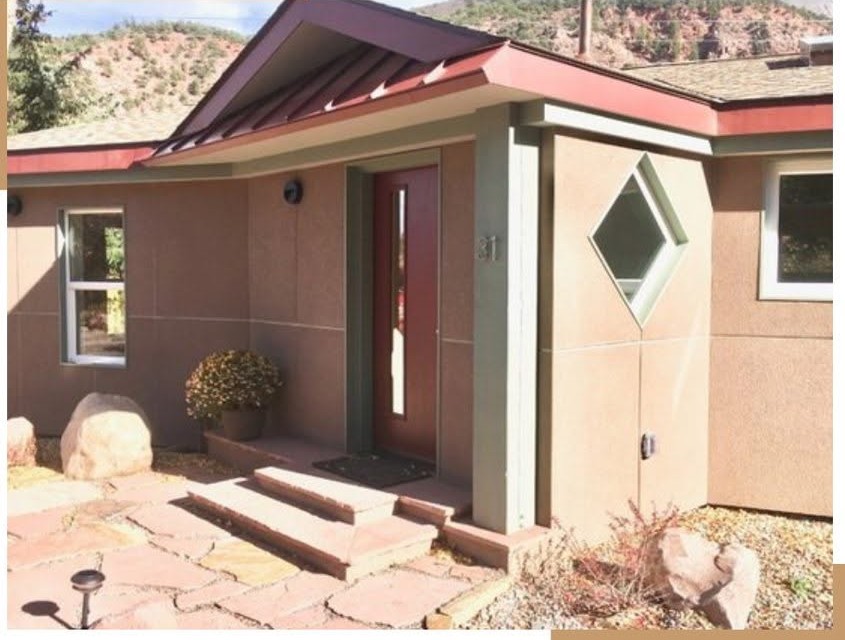
Sustainability is not a product you bolt onto a building. It is a set of decisions made in the first weeks of design — orientation, window placement, roof shape, insulation strategy — that cost almost nothing on paper and pay back for decades. Colorado's 300 days of sun make passive design unusually powerful here, and unusually wasteful to ignore.
The firm designs to a simple hierarchy: reduce demand first (orientation, shading, airtight envelope), then meet what remains efficiently (heat pumps, energy recovery ventilation), then offset the rest (solar-ready roofs or PV from day one). The result is a home or building with dramatically lower utility bills and measurably better comfort.
Whether the target is an all-electric new home, a deep energy retrofit of a 1920s bungalow, or simply a building that beats the energy code by a comfortable margin, performance goals are set early, modeled, and verified — not guessed.
Protect your family’s future with net-zero energy and wildfire defense
The largest remaining and barely tapped energy source left on Earth is the energy we waste. E.P.A. data shows 22% of all USA destructive greenhouse gases come from residential heating and cooling, because 96% of existing — especially older — homes are under-insulated, causing waste and discomfort. The ten solutions below reduce 50% to 80% of heating and cooling costs while adding one-hour wildfire resistance for existing and new code-built homes.
Patented: “exo thermo” — 5 patents
Darek holds five patents on “exo thermo”: an exterior system that prevents fire ignition on the outside of a house from wildfires, and super-insulates the house without any work inside it — adding roughly 4 inches of thickness to the exterior.
Ten solutions toward net zero
- 1.Insulate from the outside by attaching insulation to a home’s exterior sheathing, brick, or metal walls and roof — an outer continuous R-30 insulating envelope with a 1-hour wildfire rating.
- 2.This envelope also provides an air and water infiltration barrier. Insulate the top of your attic floor deck properly, then add reflective foil facing up to reflect summer heat out the attic vents and keep the rooms below cool.
- 3.A 25-year-old double-wide modular FHA home in Carbondale, CO received dormer additions and an exterior envelope — and a Home Energy Rating Score of 50, meaning 50% more efficient than new code-built homes.
- 4.If you have a crawl space, close off vents, vapor-seal its floor, and insulate the concrete walls and rim joists. It saves energy and makes the floor above foot-warm.
- 5.Exterior envelopes add 3 to 5 inches of super-insulating, one-hour fire resistance to your outer walls and roof, making them durable, substantial, and desirable.
- 6.Homes are correctly measured from the outside. Thicker walls create about 3% more sellable floor area — that value alone pays for half the installation cost; the savings and looks pay the rest.
- 7.Great insulation lets you halve HVAC equipment size and run small, high-efficiency electric heat pumps. Federal and state incentives pay 38% toward the first cost of this equipment.
- 8.Power your heat pumps with clean PV solar on site or through an off-site PV power supplier. Thermal solar panels can provide all domestic hot water; combined rebates pay about 60% of the cost.
- 9.Breathe fresh air 24/7 with a Mechanical Ventilation Heat Recovery (MVHR) system that recovers heat from exhausted stale air to warm incoming fresh air — and cools in summer mode.
- 10.Passive solar provides free radiant heating: south-facing overhangs shade the high summer sun while the low winter sun beams inside, where tiled slab floors absorb heat and release it nightly.
The result
With these relatively inexpensive and effective improvements you can reach net-zero energy and reap 75% to 80% in energy savings per year. If financed, savings can pay it all back in 4 to 8 years, depending on the climate. See the passive-and-active-solar home Darek designed and built in El Jebel, CO in the gallery.
Common questions
Yes — the first half hour is free. It's a chance to talk through your site, your goals, and your budget, and to see how Darek works: he sketches during the meeting, so you leave with a drawing in hand. If there's no synergy, there's no charge — all will know, and you're free to move on. From there, work runs at $225/hour, with the hourly price reduced after 5 hours.
Related services
Feasibility, Zoning & Permitting Support
Know what you can build — before you buy the lot or hire the contractor.
Healthy Home Design
Daylight, fresh air, and low-toxicity materials, designed in from the start.
Home Design Counseling
Hourly guidance for homeowners who need answers, not a full commission.
Realtors Design Counseling
Give your buyers a straight answer about what a house can become.
Builder Resources
Drawings that survive the field, and an architect who answers the phone.
Mystical Architecture & Healthy Home Design
Sacred geometry, Feng Shui, and building science combined into one healthful design.
On-Site Architecture Solutions
The architect in the room, solving it where the problem actually is.
Drawing & 3D Drawing Solutions
See it before it is built — precise drawings and 3D models of your project.
Request a Consultation
Tell us about your project.
Every engagement begins with a conversation. The first half hour is free — if there's no synergy, there's no charge. Darek Shapiro reviews each inquiry personally, backed by 40 years of experience.
Prefer email? The consultation form takes about two minutes — or call or text (970) 989-3877 any time.